

2025 was a year of significant restructuring of the cloud and virtualisation market. Uncertainty with vendors, rising need for better cost control, rapid adoption of AI workloads and new requirements around data sovereignty pushed organisations to reassess long-established assumptions about where and how their workloads should run.
After years of “cloud-first” enthusiasm, many companies shifted their focus toward control, predictability and long-term vendor independence. This brought a rising interest towards open-source and the implementation of multi-hypervisor strategies. Another rising trend is the demand for GPU-as-a-Service, pushing cloud and MSP providers to adapt their offerings to meet a new wave of AI-driven expectations.
Across industries, four themes stood out consistently throughout the year:
- a move toward multi-hypervisor strategies to mitigate dependency on a single vendor;
- the steady growth of GPUaaS platforms built to support AI and ML workloads more efficiently;
- an emphasis on cost-driven architectural decisions, including cloud repatriation and consolidation;
- a move towards open-source infrastructure to ensure transparency, sovereignty and adaptability.
This article brings together an expert summary of the cloud and virtualisation market from ShapeBlue’s experience and our industry observations from working with multiple cloud integrators and third-party vendors. We will outline how enterprise virtualisation and cloud strategy evolved in 2025 and why these trends will continue to shape decision-making in 2026.

Multi-Hypervisor Becomes a Strategic Default in the Cloud and Virtualisation Market
One of the shifts in 2025 was the move away from relying on a single hypervisor. The uncertainty created by the VMware-Broadcom acquisition was a catalyst. But the underlying driver runs deeper: enterprises want to reduce dependency on licensing changes and regain architectural control.
Industry reports throughout the year highlighted this trend. The Register noted that organisations intensified their evaluation of alternative hypervisors, while TechTarget reported a rise in dual and multi-hypervisor planning. This reflects a broader shift in how virtualisation is being approached: resilience through diversification, not dependency.
We noticed this pattern in CloudStack user engagements, where increasing numbers of organisations adopted the platform as part of broader VMware migration or diversification initiatives. The objective is no longer to replace one vendor with another, but to design an environment where technologies such as KVM, Xen, Proxmox, Hyper-V or specialised hypervisors can coexist.
The introduction of the XaaS Extensions Framework in CloudStack 4.21 reinforced this trend by making hypervisor integration more flexible. Instead of being limited to a predefined set of hypervisors, organisations can now orchestrate external platforms through lightweight extensions. This model is shown in a recent ShapeBlue’s video, which shows CloudStack integrating with multiple hypervisors using the new extension mechanism:
https://www.youtube.com/watch?v=Rt4GqRJ2IfA
Throughout 2025, the rationale behind multi-hypervisor adoption remained consistent:
- avoiding dependency on a single vendor’s pricing and roadmap;
- maintaining the ability to shift workloads or adopt new technologies without large-scale migrations;
- reducing operational risk through diversification;
- enabling sovereign cloud and edge strategies without being constrained by proprietary formats.
By the end of the year, multi-hypervisor design had evolved from a defensive reaction to a strategic standard in the cloud and virtualisation market. It gives organisations the flexibility and resilience they increasingly seek in their virtualisation layer.
GPUaaS Platforms Gain Momentum
Demand for AI and accelerated computing continued to grow in 2025. Both enterprises and Service Providers re-evaluate how they deploy and deliver GPU capacity. While hyperscale public clouds are good option for initial experimentation, many organisations encountered limitations around costs, data locality and inconsistent access to GPU resources. These pressures contributed to a broader shift toward GPU-as-a-Service (GPUaaS) models that offer greater control, predictable economics and the ability to keep sensitive workloads within a managed infrastructure boundary.
For MSPs and CSPs, this transition was more significant. GPUaaS platforms reduce exposure to hyperscaler pricing, support vendor-independent infrastructure design and open new revenue opportunities. At the same time, they simplify operations and reduce the total cost of ownership compared to public cloud GPU instances. As a result – more providers now offer shared or dedicated GPU capacity. This model has proven valuable in regions where hyperscaler GPU availability is limited or unpredictable, or where customers require sovereign or strictly local processing guarantees.
 According to a 2025 report by Grand View Research, the global GPU-as-a-Service market was valued at USD 3.8 billion in 2024 and is projected to reach USD 12.26 billion by 2030, with a compound annual growth rate of 22.9%. The primary drivers include rising demand for GPU acceleration in AI, ML and large-scale data processing workloads.
CloudStack is evolving in the same direction. With version 4.21, GPUs became first-class resources, enabling Administrators to expose dedicated or virtualised (vGPU) capacity directly through the platform. ShapeBlue’s technology walkthrough demonstrates how internal or service-provider GPUaaS environments can be delivered on top of CloudStack orchestration:
https://www.youtube.com/watch?v=aYGgUpKth7I
Across 2025, organisations adopting GPUaaS, consistently cited motivations such as:
- predictable access to GPU resources for AI and ML workloads
- improved utilisation through shared GPU pools
- maintaining data locality for sensitive training and inference
- supporting sovereign cloud strategies where hyperscalers cloud regions are limited
- reducing long-term exposure to fluctuating cloud GPU pricing
By late 2025, GPUaaS had clearly shifted from a niche capability to a mainstream expectation. Both enterprises and CSPs began treating GPU acceleration as a core service layer.
Cost-Driven Architectures and Cloud Repatriation
2025 was a year marked by tighter financial discipline in IT. After more than a decade of deprioritising infrastructure cost transparency in favour of agility, many organisations reassessed where their workloads should run and why. As overall operating costs continued to rise, from hardware and energy to software licensing and managed services, companies faced increasing pressure to control expenses while remaining competitive in markets where customers did not easily accept price increases. This pushed CIOs and architects to evaluate whether specific workloads were better placed in on-premise or privately managed cloud environments, especially where cost predictability and long-term budgeting had become critical.
Industry reports across 2024–2025 reflected this shift. Coverage in CIO.com and BizTech noted an apparent rise in organisations pulling back specific workloads from public cloud, motivated by cost predictability, data-sovereignty requirements and the need for more consistent performance.
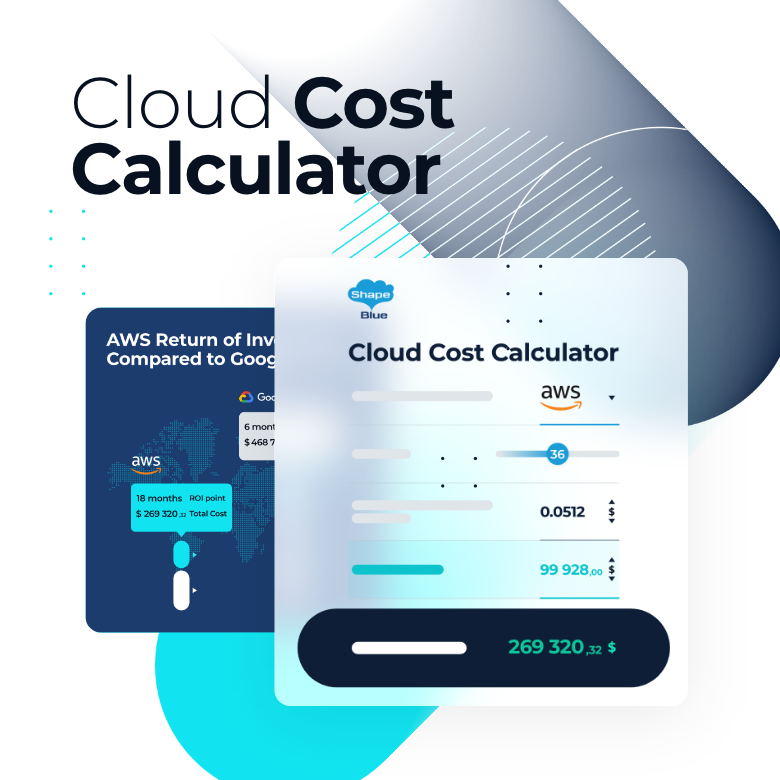 Independent analyses mirrored the same trend. ShapeBlue’s Cloud Cost Calculator and Pricing Report, a comparative study evaluating the long-term cost of running workloads on CloudStack-based infrastructure versus hyperscalers, highlighted how variable cloud consumption models, particularly for data-intensive workloads, continue to introduce cost unpredictability for many organisations.
These findings reinforced the growing need for more transparent and controllable infrastructure strategies:
https://www.shapeblue.com/cloud-cost-calculator-and-cloud-pricing-report/
Real-world cases reinforced this narrative. 37signals (Basecamp) publicly detailed its decision to move several workloads off AWS, estimating annual savings of approximately USD 1.3 million by running those services on its own infrastructure.
Rather than a full return to on-prem environments, most of these moves were selective and workload-specific. Common drivers included:
- predictable cost models for steady or high-volume workloads
- reduced exposure to variable egress and data-movement charges
- regulatory or sovereignty constraints requiring local processing
- consolidation of environments that had become fragmented over time
- aligning infrastructure spending with measurable business value
Within the CloudStack ecosystem, this trend was reflected in increased interest from Cloud Service Providers and enterprises looking to operate their own cloud platforms with full visibility into cost structure. For these organisations, private or sovereign clouds offered a way to retain cloud-like automation while maintaining control over where data is stored and how resources are allocated.
By the end of 2025, cost-driven architectures had become a prominent theme across the industry. Instead of shifting wholesale to public cloud or on-prem, organisations embraced hybrid strategies grounded in economic reasoning, placing each workload where it delivers the most predictable and sustainable value.
Renewed Interest in Open-Source Infrastructure
In 2025, many organisations turned to open-source infrastructure as foundational pillars for long-term flexibility, control and adaptability. The decision reflects a broader strategic shift: with rising pressure on cost, compliance and sovereignty, open-source offers transparency, vendor-independence and a path to predictable evolution.
Recent data from the Linux Foundation gives concrete evidence of this shift. In the 2024 Global Spotlight Insights Report, 79% of respondents stated that open-source development leads to better software, 68% considered open-source software more secure than closed-source, and 64% reported increased business value from OSS use (with 56% reporting benefits from contributing to OSS). The same survey highlighted that AI/ML workloads emerged as the category most expected to benefit from open-source software, reinforcing the alignment between open infrastructure and modern, data-intensive use cases.
Adopting open-source infrastructure offers concrete benefits, especially when organisations need:
- architectural independence from proprietary licensing models,
- visibility and control over automation, orchestration and data flows,
- the flexibility to integrate or replace components without vendor lock-in,
- a stable baseline for hybrid or sovereign clouds, where compliance, data-locality and auditability matter,
- and a pathway for innovation, leveraging community-driven development, rapid iteration and interoperability across compute, storage and network layers.
For projects like Apache CloudStack, this shift aligns naturally: CloudStack, as an open-source orchestration platform, benefits from the ecosystem’s renewed emphasis on open infrastructure, and the 4.21 release (with its extensible XaaS Extensions Framework) gives organisations the technical means to build sovereignty-friendly, vendor-neutral cloud environments.
By end of 2025, open-source infrastructure had firmly re-established itself as a default strategic choice, not a niche, but a mainstream foundation for enterprise and CSP cloud architecture.
The Cloud and Virtualisation Market Enters a New Era of Independence
By late 2025, the industry had moved away from rigid cloud-first assumptions toward open and cost-aware architectures built around choice rather than dependency. Organisations concluded that long-term resilience depends on maintaining control over hypervisor strategy, GPU capacity, data locality and the economic profile of their workloads.
Apache CloudStack played a relevant role in this transition. Its open-source model, multi-hypervisor orchestration and GPUaaS capabilities gave enterprises and Service Providers a stable platform for building sovereign, transparent and operationally predictable clouds. As the focus shifts to 2026, infrastructure strategies centred on control, interoperability and architectural independence are set to accelerate and CloudStack’s design positions it well for this new phase.

Marco Sinhoreli is a seasoned Principal Technical Marketing Manager at ShapeBlue, with over 25 years of IT experience. As an Apache CloudStack expert and committer, he specializes in creating and delivering technical marketing content that bridges the gap between technology and business. Marco has consulted major companies on implementing IaaS solutions with CloudStack, focusing on delivering cloud infrastructure that supports both immediate and long-term business needs. When he’s not diving into cloud solutions, Marco loves playing guitar, exploring new places, and staying updated on politics.

